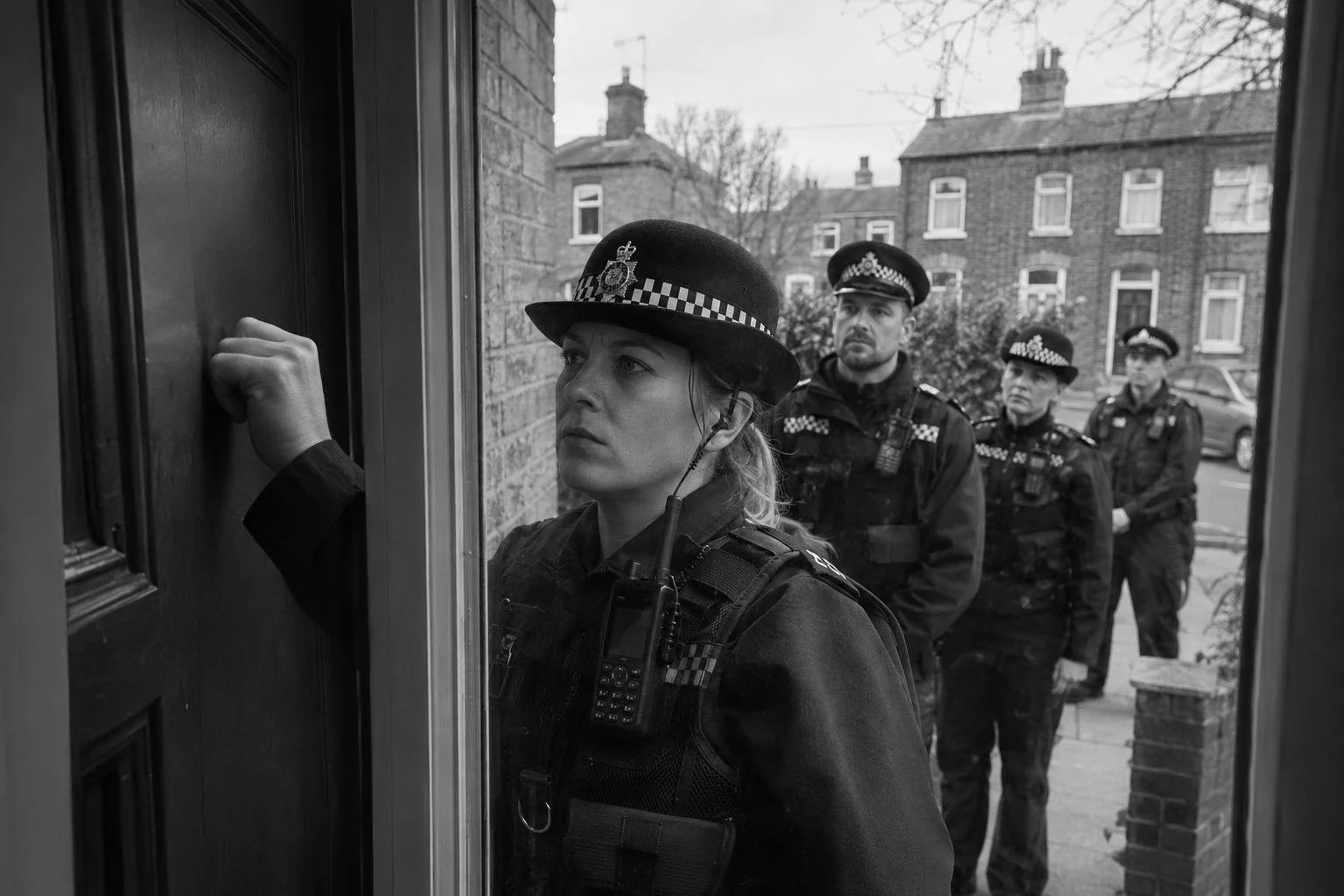
When the police come to your door
When the police come to your door
Most parents want to help when the police knock. You know your son, you believe he has done nothing wrong, and you assume a friendly chat will clear things up. In our experience, that is exactly what many families do. But a friendly chat at the door is still part of a police investigation, and what you say, and what you allow, can matter later.
Can the police come in?
If officers come without a warrant and without a legal power to enter, they can only come in with your consent. You do not have to let them in. If you do let them in, you can withdraw your consent at any time and ask them to leave. Consent must be clear, informed and not given under pressure.
The police do have powers to enter without a warrant in some situations, for example to save life or to arrest someone. But they cannot force entry just because you refuse to speak to them.
If your son is arrested at home
After an arrest, the police may search premises connected to the person arrested for evidence related to the offence. Stay calm, do not obstruct officers, and ask:
What is he being arrested for?
Which police station is he being taken to?
Can I go with him as his appropriate adult?
What to remember
Be polite, but you do not have to answer questions on the doorstep.
Anything you or your son say can be noted and used later.
If he is under 18, he must have an appropriate adult before any interview.
He is entitled to free legal advice. Ask for a solicitor straight away, and do not let him answer questions until he has one.
Where we stand
We are not suggesting the police act unlawfully. The problem is that most families do not know their rights at the moment it matters most. We are calling for every family to be given clear, plain-English information about their rights, and their child's rights, when the police first make contact.
Further viewing
Barrister Daniel ShenSmith, the BlackBelt Barrister, has a useful video on whether to talk to the police: Why You Shouldn't (or Should) Talk to the Police. We link to it for information. It is not legal advice, and it does not mean we endorse his views.
When a child is held in police custody
Under the police codes of practice, anyone who appears to be under 18 must be treated as a child, unless there is clear evidence they are older. That brings extra protections, including an appropriate adult and a duty on the custody officer to find out who is responsible for the child's welfare and contact them.
But a child in a police cell may need more than that. If he has special educational needs, a mental health condition, attachment difficulties or claustrophobia, or is at risk of harm, children's social services and health professionals may have an important part to play in keeping him safe.
The gap
In our experience, children's social services are not always told when a child is held. Families are often left to make the referral themselves, if they even know they can. We did it ourselves, every time, because we wanted another layer of safeguarding around our son.
When families are not listened to
In our experience, even when parents phone the custody suite repeatedly and warn officers that their child is at risk of suicide, is claustrophobic or has special needs, that information is not always recorded or acted on. A child can be left alone in a cell for many hours with little more than a hot drink and a snack.
What parents can do
Contact your local council's children's services front door (often called MASH, or the children's services duty team) and tell them your child is in police custody.
Explain any needs: special educational needs, an EHCP, mental health, attachment, claustrophobia, or any risk of self-harm.
Ask for the referral to be recorded, and note the name of the person you spoke to and the time.
Tell the custody officer and the appropriate adult that you have done this.
Keep a note of every call you make to the custody suite: the time, who you spoke to and what you told them.
Afterwards, you can ask for a copy of the custody record to check what was recorded.
Where we stand
Most police officers and custody staff do a difficult job well, often under real pressure. Our concern is not with them, but with gaps in the system that can leave a vulnerable child without the protection he needs.
We are calling for
Children's social services to be told every time a child is held in police custody, as a clear and consistent requirement.
Every piece of risk information given by a parent to be recorded on the custody record, passed to the custody nurse or healthcare professional, and answered in writing, so families know they have been heard.
Independent welfare checks for every child in custody, carried out by a qualified health or social care professional who is not employed by the police, at regular intervals and recorded on the custody record.
Reasonable adjustments for a child's known needs, such as claustrophobia, to be considered and recorded.
This page is general information, not legal advice.